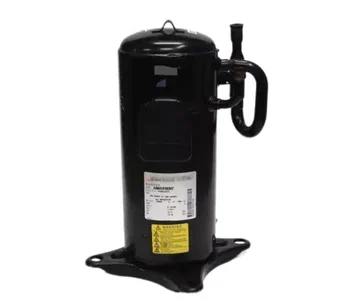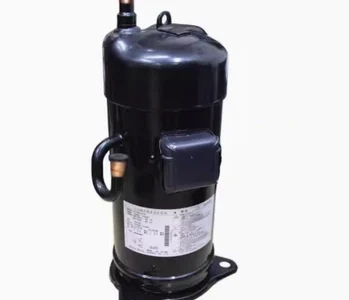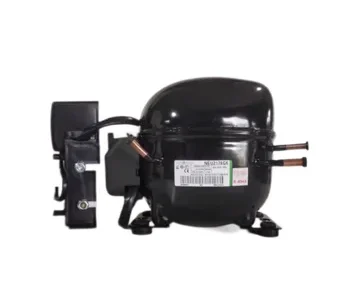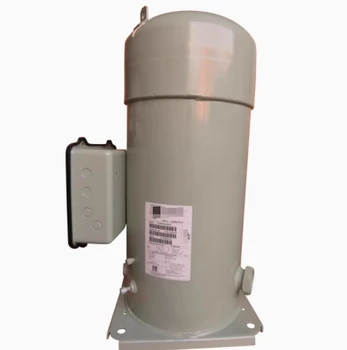
The CSHN315D0BKM compressor is a high-capacity unit aimed at heavy commercial refrigeration – cold storage warehouses, supermarket racks, blast freezers, and process cooling. Priced from $1,300 factory-direct with one-piece minimum orders, it targets the duty range where compressor quality decides whether a facility keeps running. This guide covers specifications, system design considerations, maintenance strategy, total-cost-of-ownership analysis, and buying guidance for engineering and procurement teams.

Quick Answer: What Duty Is the CSHN315D0BKM Built For?
Continuous heavy-duty refrigeration. Where small compressors cycle on and off, large commercial systems run long hours under high load, often 24/7, with product value riding on uptime. The CSHN315D0BKM is engineered for that regime – large evaporator loads, sustained pressure differentials, and the thermal cycling stress of real cold-chain operation.
CSHN315D0BKM Specifications
| Parameter | Specification |
|---|---|
| Model | CSHN315D0BKM |
| Class | High-capacity commercial refrigeration compressor |
| Typical duty | Cold storage, supermarket racks, process cooling |
| Minimum order quantity | 1 piece |
| Price | from $1,300 (contact for quotation) |
| Warranty | Manufacturer warranty included |
Why Large Refrigeration Systems Are Hard on Compressors
Understanding the duty explains the design. A household fridge compressor runs a few hours a day at gentle pressures. A cold-room or supermarket rack compressor faces:
- Pull-down loads: after defrost or door-opening events, the compressor must pull the whole thermal mass back down – sustained high differential pressure.
- Continuous runtime: 16-24 h/day in production cold rooms, with correspondingly accelerated wear hours.
- Wide load swings: day/night ambients, defrost cycles, product loading spikes.
- Remote and harsh environments: plant rooms with dust, high ambient temperatures, and variable power quality.
- High cost of failure: a down compressor in a food facility threatens tens of thousands of dollars of stock – reliability is an economic parameter, not a spec-sheet nicety.
Compressors in this class answer with heavier internal construction, larger bearings, robust valve systems, and motor insulation rated for sustained thermal load. The CSHN315D0BKM’s positioning at $1,300 factory-direct is notable because comparable-capacity units through Western distribution chains routinely land at multiples of that.
Application Scenarios: Where the CSHN315D0BKM Works
Scenario 1: Distribution cold rooms and food storage warehouses
A regional food distributor runs cold rooms at -18 C (frozen) or +2 C (chilled) around the clock, with the compressor cycling through defrost recovery and loading-door infiltration spikes. Product worth tens of thousands of dollars rides on uptime. This is the CSHN315D0BKM’s home territory: sustained high load, long running hours, and an economic reality where a reliable $1,300 factory-direct compressor outperforms a cheaper unit that fails during a stock-holding weekend. Facilities managers typically hold one standby unit on the shelf for exactly this class of machinery.
Scenario 2: Supermarket refrigeration racks
Supermarkets consolidate display-case and walk-in cooling into central rack systems where several compressors run in parallel – some variable, some fixed – to track the store’s load curve through trading hours, defrost cycles, and door traffic. Adding or replacing a high-capacity fixed-speed stage on such a rack is a routine CSHN315D0BKM application: the unit anchors the base load while smaller stages trim. Rack operators value the factory-direct price against the steep markups of the traditional distribution chain for this exact part class.
Scenario 3: Blast freezers in food production
Blast freezing is the harshest common duty in commercial refrigeration: pulling fresh product down through the freezing zone fast, against thick insulation losses, in high-ambient plant rooms. The compressor runs near its envelope maximum for hours at a stretch. Heavier internal construction – bearings, valve system, motor insulation – is what separates units that survive blast duty from those that do not, and it is why this duty class justifies the capacity rating of the CSHN315D0BKM.
Scenario 4: Industrial process cooling
Plastics molding, brewing, dairy, and chemical processes use chilled-water circuits to hold process temperatures. Unlike comfort cooling, process duty runs to the production schedule – long steady hours at consistent load, the profile that lets a well-built fixed-speed compressor run 10-15 years. Maintenance teams specify this class of compressor with an eye on the TCO math covered later in this guide, and hold spares where downtime halts a production line.
System Design and Selection Considerations
Capacity matching
Undersizing causes endless runtime and warm product; oversizing causes short-cycling, poor oil return, and humidity control problems. Selection belongs at system design time: match compressor displacement to the calculated load including pull-down requirements, defrost recovery, and a realistic simultaneous-use factor.
Single large vs multiple smaller compressors
Many rack systems deliberately use several mid-size compressors instead of one large unit: redundancy (a single failure degrades capacity rather than stopping it), better part-load efficiency through staging, and easier maintenance. If you are building or refurbishing, weigh this architecture before assuming one big compressor is the answer.
Electrical infrastructure
Large compressors draw significant starting current. Verify supply capacity, starter/soft-start provisions, and protection coordination. Soft starters or part-winding starts reduce mechanical and electrical shock on the system.
Oil management
In long-line and rack systems, oil separation and return design is critical engineering – oil that does not come back eventually kills the compressor. Follow the installation manual’s piping velocity and trap requirements exactly.
Maintenance Strategy That Protects the Investment
A structured program extends compressor life dramatically:
- Weekly: log suction/discharge pressures, discharge temperature, oil level, and running amps. Trends catch problems weeks before failure.
- Monthly: clean condenser coils; verify superheat and subcooling; inspect contactors and electrical terminations (heat discoloration is an early warning).
- Quarterly: oil acidity sampling after any burnout event; check safeties (HP/LP switches, motor protection) by actual test, not inspection.
- Annually: full performance test against commissioning baseline; refrigerant charge audit; vibration check.
The most common killers of large compressors, in field-failure order: dirty condensers (high head pressure), refrigerant leaks leading to high superheat and overheated motors, liquid floodback from faulty expansion valves, and electrical events (undervoltage, phase loss). Every one of these is preventable with basic monitoring discipline – which is why the logging habit above pays for itself many times over.
Total Cost of Ownership: How to Think About the $1,300 Price
Unit price is the small end of the economics for this class of equipment. A realistic TCO model includes:
- Energy: the compressor is the largest electricity consumer in most refrigeration facilities; efficiency deltas compound over 10+ years of runtime.
- Downtime risk: stock loss, emergency freight, overtime labor. Reliability and warranty support dominate this line.
- Service life: well-maintained commercial compressors run 10-15+ years; abuse halves that.
- Spares strategy: for critical facilities, holding one standby unit is cheap insurance against five-figure product losses.
At $1,300 factory-direct, the CSHN315D0BKM’s acquisition cost is low enough that energy and downtime dominate its lifetime equation – which is the correct hierarchy for procurement decisions in this class.
Ordering and Support
Request a formal quotation with your capacity requirement, refrigerant, voltage, and destination – the engineering team confirms the configuration before you commit. Shipping runs worldwide by air (urgent replacements) or sea (planned projects and volume), with export-grade packaging. For facilities teams, request the installation manual and commissioning checklist in advance so site works can be planned around delivery.
View the CSHN315D0BKM product page for a quotation. Technical documentation requests go through the documents page.
Pros and Cons
| Pros | Cons |
|---|---|
| Built for continuous heavy-duty refrigeration duty | Higher unit price than light-commercial models (reflects capacity class) |
| Factory-direct pricing well below distribution-chain alternatives | Requires professional system design and electrical infrastructure |
| 1-piece MOQ enables critical-spares stocking | Not an inverter model – fixed-speed operation |
| Worldwide air/sea shipping with export packaging | Availability tied to production scheduling for large frames |
Frequently Asked Questions
What refrigerant does the CSHN315D0BKM use?
Confirm at quotation stage – large commercial frames are configured for specific refrigerants per order. State your system’s refrigerant when requesting a quote.
Is one big compressor better than several smaller ones?
It depends on your redundancy and part-load requirements. Rack architectures with multiple compressors offer graceful degradation and better staging; single large units are simpler and cheaper to install. Discuss your load profile with the engineering team.
What warranty applies?
Manufacturer warranty is included; duration and terms depend on order and destination. Proper commissioning documentation supports warranty claims.
Can you supply to my country?
Yes – worldwide shipping by air and sea freight with export packaging and documentation.
Do you provide commissioning support?
Installation manuals, commissioning checklists, and technical datasheets are available through the documents team; remote engineering support accompanies volume orders.
Conclusion
For heavy commercial refrigeration, compressor selection is a reliability decision with direct product-loss consequences. The CSHN315D0BKM brings genuine heavy-duty construction, factory-direct economics at $1,300, and flexible one-piece ordering for both projects and spares programs. Pair it with disciplined maintenance and it anchors a cold chain you can trust. Explore the complete product range or the solutions section for application-specific options.