Compressor Guides August 25, 2026 info@rtcompressor.com

SNB130FGYMC-L1 Inverter Rotary Compressor: 9980 BTU/h R410A Specs and Price

The SNB130FGYMC-L1 is an inverter rotary compressor rated at approximately 9,980 BTU/h (0.8 HP) for R410A systems, available factory-direct from $140. It sits in the most competitive segment of the AC market – the small inverter split unit – where energy efficiency regulations and consumer running-cost awareness drive every design decision. This guide explains inverter rotary technology in practical terms, gives the full specification picture, covers sizing and drive-matching, and answers the questions engineers and buyers ask most.

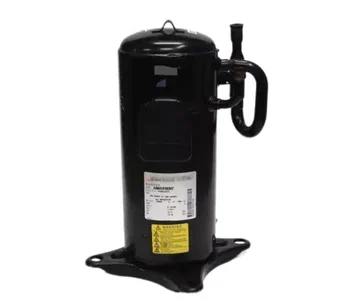
SNB130FGYMC-L1 R410A inverter rotary compressor 9980 BTU/h for split air conditioners
The SNB130FGYMC-L1 inverter rotary compressor – 9,980 BTU/h R410A class for small split systems.

Quick Answer: What Is the SNB130FGYMC-L1?

A variable-speed (inverter-driven) rotary compressor for R410A, sized for small split-type air conditioners at roughly 9,980 BTU/h – the capacity of a typical bedroom or small-office indoor unit. “FGYMC-L1” denotes the frame and drive-compatible variant within the SNB130 family. It is a component for inverter systems: it must be paired with a matching variable-frequency drive (the inverter PCB), and it cannot run direct-on-line like a fixed-speed compressor.

Specifications

Parameter Specification
Model SNB130FGYMC-L1
Compressor type Rotary, inverter (variable speed)
Nominal capacity ~9,980 BTU/h (0.8 HP class)
Refrigerant R410A
Drive requirement Matching inverter drive (variable frequency)
Minimum order quantity 1 piece
Price from $140 (contact for quotation)

Rotary Compressor Technology, Explained Properly

In a rotary compressor, an eccentric roller spins inside a cylinder, with a spring-loaded vane keeping contact against it. As the roller turns, the crescent-shaped space between roller and cylinder wall shrinks continuously – intake, compression, and discharge happen in one smooth rotary motion rather than the reciprocating piston strokes of older designs.

The practical consequences at this capacity class:

  • Fewer moving parts than reciprocating designs – no piston rings, no connecting rods – which means less friction loss and fewer wear items.
  • Compact and light: the cylinder arrangement packs a given capacity into a smaller, lighter shell – critical for slim outdoor units and wall-mounted indoor assemblies.
  • Smooth torque: continuous compression produces less vibration and lower noise than reciprocating pulses – a comfort feature you can hear in a quiet bedroom at night.
  • Efficient at small capacities: rotary designs hit their efficiency sweet spot precisely in the 0.5-3 HP band where reciprocating and larger scroll designs give away ground.

What “Inverter” Changes About Everything

A fixed-speed compressor is binary: full output or nothing. The system satisfies demand by cycling on and off, and every start draws locked-rotor current – typically 5-7 times running current – while delivering zero cooling for the first moments of the start transient.

An inverter compressor like the SNB130FGYMC-L1 instead varies its speed to match load:

  • Efficiency: part-load operation at reduced speed is fundamentally more efficient than cycling; system-level energy savings of 30-40% versus fixed-speed are typical, because the system spends most of its life below design load.
  • Comfort: output tracks load continuously, holding room temperature within roughly 0.5 C instead of swinging 2 C around the setpoint.
  • Electrical kindness: soft-start ramping eliminates inrush transients – kinder to the compressor, the contactor-free drive stage, and the building’s electrical system.
  • Dehumidification control: sustained low-speed running gives better latent removal than short high-power blasts.
  • Longevity: start-stops are where compressors die; eliminating most of them removes the dominant wear mechanism.

The trade-off is complexity: the inverter drive must match the compressor’s electrical characteristics, and drive-compressor mismatch is the fastest way to destroy an inverter compressor.

Application Scenarios: Where the SNB130FGYMC-L1 Works

Scenario 1: Bedroom and living-room inverter splits

The 9,980 BTU/h class is the volume backbone of the residential inverter split market – the unit on a 12-18 m2 bedroom that runs every night through the cooling season. This is where inverter technology pays most visibly: instead of the on-off temperature swings of a fixed-speed unit, the SNB130FGYMC-L1 ramps down to a quiet low-speed cruise overnight, holding the setpoint within half a degree while drawing a fraction of full-load power. For appliance brands, the $140 factory price makes genuine inverter performance achievable in entry-level product lines.

Scenario 2: Hotel guest-room cooling

Hotels run hundreds of small indoor units with wildly diverse occupancy – empty rooms at minimum load, occupied rooms at full comfort demand. Inverter modulation tracks each room independently, and the energy difference across a 200-room property shows up on the monthly electricity bill. Guest-experience benefits compound the economics: low-speed overnight operation is quiet enough for light sleepers, and tight temperature control avoids the middle-of-the-night chill of a cycling unit.

Scenario 3: Small offices and consulting rooms

A 10-20 m2 office with one or two workstations has a load profile dominated by part-load hours: mornings at low demand, afternoons with solar gain and equipment heat. An inverter compressor in this space spends most of the day modulating between 30-60% output – precisely the operating region where fixed-speed units waste energy cycling. Clinic consultation rooms and classrooms follow the same pattern: intermittent occupancy, quick pull-down wanted, quiet operation essential.

Scenario 4: Dehumidifiers and specialty environmental units

Compact refrigerant-circuit dehumidifiers – for basements, archives, and indoor agriculture drying zones – need small, efficient, variable-capacity compression to hold humidity setpoints without overcooling. The rotary architecture’s compactness and smooth torque suit appliance-scale enclosures, and OEM builders value a factory-direct inverter rotary at this price point for margin-sensitive consumer products.

Sizing: Is 9,980 BTU/h Right for Your Unit?

Room capacity rules of thumb (temperate climate, standard insulation): roughly 20-25 BTU/h per square meter for cooling-dominated rooms. That puts a 9,980 BTU/h unit at:

  • Ideal: bedrooms 12-18 m2, small offices, hotel guest rooms
  • Workable: larger rooms with light load or low solar gain, given inverter modulation
  • Wrong tool: living rooms over ~25 m2 with heavy solar load – step up a capacity class

For OEMs: match the compressor to the indoor coil, expansion device, and drive as a system. For repair buyers: match the failed compressor’s family and drive protocol – inverter compressors are generally not interchangeable across drive platforms.

Drive Matching: The Critical Engineering Step

Before ordering or installing, confirm against the compressor datasheet:

  1. Frequency range: the drive’s minimum/maximum output frequency must sit inside the compressor’s envelope.
  2. Current rating: drive continuous current at the compressor’s operating points.
  3. Control method: sensorless vector or dedicated compressor control per the datasheet.
  4. Protection settings: overload, stall, and phase-loss thresholds matched to motor characteristics.
  5. Oil return strategy: drives on long-line systems often schedule periodic high-speed runs to return oil – confirm this feature exists and is enabled.

Installation Notes Specific to Inverter Rotaries

  • Deep vacuum discipline: R410A + POE oil + inverter motor windings make moisture the universal enemy. Below 500 microns, held.
  • Charge by weight: small inverter systems hold sensitive charges; a scale is mandatory, not optional.
  • Wiring separation: keep drive output cables away from signal wiring; PWM output is electrically noisy.
  • Vibration mounting: use the supplied isolators – rotary designs are smooth but transmit high-frequency vibration through rigid mounts.
  • Never power directly on-line: connecting mains across an inverter compressor’s terminals destroys it instantly.

Price and Ordering

At from $140 per unit with one-piece MOQ, the SNB130FGYMC-L1 undercuts typical distribution-channel pricing for inverter rotaries substantially – which matters in the cost-driven small-split segment. OEM volume pricing steps down further; request a quotation with your annual quantity. Availability suits both sample validation and production scheduling, with worldwide air and sea freight.

View the SNB130FGYMC-L1 product page for pricing or use the quotation form for volume orders.

Pros and Cons

Pros Cons
30-40% system energy savings vs fixed-speed Requires matching inverter drive – cannot run direct-on-line
Exceptional price point from $140 R410A only – not for R32/A2L circuits
Quiet, low-vibration rotary architecture Drive-mismatch risk demands engineering diligence
Ideal capacity for the highest-volume AC segment Not serviceable in the field – sealed hermetic design

Frequently Asked Questions

Can the SNB130FGYMC-L1 replace a fixed-speed compressor?

No. An inverter compressor requires its variable-frequency drive; a fixed-speed system has none. Replace fixed-speed with fixed-speed, inverter with a drive-compatible inverter model.

Can I use it in an R32 system?

No. R32 is an A2L flammable-class refrigerant and requires A2L-rated components throughout the circuit.

What is 9,980 BTU/h in other units?

Approximately 2.93 kW of cooling, 0.8 nominal HP – the standard “1 HP small split” market segment in many Asian and Middle Eastern markets, and roughly a “9-10k” unit in UK/EU terminology.

What oil does it contain?

POE oil, standard for R410A. Systems must be kept rigorously dry – POE absorbs and holds moisture.

Do you supply the inverter drive board too?

Contact the sales team with your system details; matching guidance and drive availability are provided per project.

Is a sample order possible before production commitment?

Yes – the 1-piece MOQ exists exactly for validation purchases.

Conclusion

The SNB130FGYMC-L1 packages the three technologies that define modern small-split AC – rotary architecture, inverter modulation, R410A system compatibility – into a $140 factory-direct component sized for the highest-volume segment of the market. Get the drive matching right and install to vacuum discipline, and it delivers the efficiency and comfort inverter systems promise. See also our guide to the DA422A3F-27M central AC inverter compressor for larger inverter applications, or browse all products.

info@rtcompressor.com

Related Articles