Compressor Guides August 25, 2026 info@rtcompressor.com

JT100G-VD Variable Frequency Compressor: Inverter Technology Guide and Price

The JT100G-VD is a variable-frequency (inverter) compressor for air conditioning and refrigeration, factory-priced from $264-368. Variable-speed technology has moved from premium feature to mainstream expectation, and the JT100G-VD brings it to systems that need modulating capacity without premium-brand pricing. This deep-dive covers how variable-frequency compression actually works, the specification picture, application engineering, drive integration, and honest trade-off analysis.

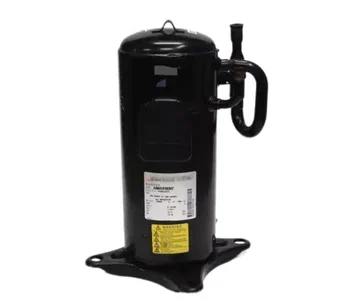
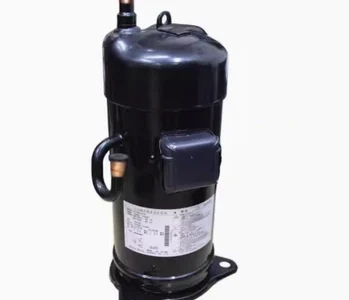
JT100G-VD variable frequency inverter compressor for air conditioning and refrigeration
The JT100G-VD variable-frequency compressor – inverter-duty construction for modulating cooling systems.

Quick Answer: What Is the JT100G-VD?

An inverter-duty compressor – “VD” denotes its variable-drive design – for systems requiring modulated capacity: precision temperature control, variable-load cooling, and efficiency-driven applications. It pairs with a matching variable-frequency drive (inverter PCB) and cannot operate direct-on-line. The $264-368 price band with 1-piece MOQ positions it for OEM system builders and high-specification replacement work.

Specifications

Parameter Specification
Model JT100G-VD (S3 designation variant)
Type Variable-frequency (inverter) compressor
Application Air conditioning and refrigeration
Drive requirement Matching inverter drive per datasheet
Minimum order quantity 1 piece
Price range $264 – $368 (contact for quotation)

How Variable-Frequency Compression Actually Works

A conventional compressor runs at grid frequency – 50 cycles per second, fixed. Its output is fixed too, so the system matches load by starting and stopping, and every start is a violent event: locked-rotor current five to seven times running draw, lubrication at zero flow for the first moments, thermal shock through the windings.

A variable-frequency system inserts an intelligent power stage between the grid and the motor:

  1. Rectification: incoming AC converts to a DC bus.
  2. Inversion: fast-switching transistors synthesize AC of arbitrary frequency and voltage – 30, 60, 90 cycles per second, whatever the control system commands.
  3. Motor response: an induction or BLDC motor’s speed follows supply frequency almost linearly – halve the frequency, roughly halve the speed, and with it the swept volume per second, and therefore the cooling output.
  4. Closed-loop control: the system controller continuously adjusts frequency to hold the measured variable (room temperature, suction pressure, process temperature) at target.

The physics of why this saves energy: vapor-compression efficiency is highest when the compressor runs slowly and continuously against a moderate load. Cycling throws away efficiency in transients; continuous modulated operation keeps the system at its sweet spot. Add the elimination of inrush losses and start-wear, and 30-40% system-level savings versus equivalent fixed-speed operation is the consistent real-world result.

What the Technology Means in Practice

  • Precision: modulated systems hold temperature within roughly 0.5 C, versus 2 C swing bands for cycling systems – the difference matters in comfort, and decisively in process cooling, server rooms, and laboratory applications.
  • Latent control: continuous low-speed operation removes humidity more steadily than short full-power bursts – better dehumidification, better perceived comfort.
  • Electrical behavior: soft ramped starts eliminate the inrush events that stress building supplies and dim the lights – and, at scale, reduce peak-demand charges.
  • Acoustics: most hours are spent at low speed, where compressor noise is dramatically lower – the system is quietest exactly when quietness matters most, at night and in occupied hours.
  • Equipment life: start-stop cycling is the dominant wear mechanism in compressor mortality; removing it extends life and improves reliability statistics across a fleet of systems.

Application Scenarios: Where the JT100G-VD Works

Scenario 1: Precision cooling for telecom and server rooms

A telecom shelter in a remote location runs its cooling system 24/7/365 against a hard requirement: hold equipment temperature within a narrow band, because a thermal event drops a network cell. This is the defining application for variable-frequency compression: the load varies with ambient and equipment activity, and the ±0.5 C control of modulated operation is not a comfort feature but an uptime requirement. The JT100G-VD’s soft-start behavior also protects against the generator-transition transients common at such sites.

Scenario 2: Inverter split and multi-split system platforms

OEM platform teams building mid-range inverter splits and multi-splits need a dependable variable-frequency compressor at a price the product line can carry. The $264-368 band positions the JT100G-VD for exactly this: the engineering benefits of modulation – efficiency, acoustics, longevity – delivered at a factory-direct cost that keeps the finished unit competitive. Platform integration runs through the drive-matching checklist later in this guide.

Scenario 3: Variable-load cold rooms and process refrigeration

A cold room serving a variable production schedule faces the classic oversized-compressor problem: on light-load days a fixed-speed unit short-cycles – the single most damaging operating pattern for refrigeration compressors, degrading both equipment and temperature stability. A variable-frequency compressor instead ramps down and runs continuously through light-load periods, holding temperature steady while eliminating the cycling that kills equipment. The same logic applies to laboratory and process circuits with tight tolerances.

Scenario 4: Efficiency-retrofit and heat pump duty

Operators facing energy-cost pressure retrofit modulating compression where the platform allows it, converting cycling systems into modulating ones with measured savings of 30-40%. In moderate climates, the same architecture carries reverse-cycle heat pump duty (platform support to be confirmed at engineering stage) – heating season adds operating hours exactly where modulation pays again.

Drive Integration: The Make-or-Break Discipline

An inverter compressor is half of a component pair; the drive is the other half. The integration checklist before any order or installation:

  1. Frequency envelope: the drive’s output range must sit inside the compressor’s rated envelope – over-speeding destroys bearings and valves; under-speeding starves oil return.
  2. Current and torque characteristics: verify continuous current at maximum frequency against drive rating, and the control method (V/f or vector) against the motor type.
  3. Protection settings: overload, stall, over-current, and phase-loss thresholds from the compressor datasheet – defaults are frequently wrong for compressor duty.
  4. Oil-return strategy: long-line and low-load applications need scheduled high-speed oil-return runs; confirm the drive and controller implement them.
  5. Wiring practice: PWM output wiring is electrically noisy – separate it from signal cables, respect screening requirements, and protect the drive from heat and dust.
  6. Commissioning data: capture amps-versus-frequency behavior against datasheet curves as the system baseline.

Honest Trade-Off Analysis

Dimension Fixed-speed JT100G-VD inverter
Unit cost Lower Higher ($264-368 band)
System complexity Simple – contactor logic Drive + control integration required
Energy at part load Poor (cycling losses) 30-40% better
Temperature control +/- 2 C +/- 0.5 C
Start behavior 5-7x inrush current Soft ramp
Service skill level Standard refrigeration Refrigeration + drive diagnostics

The decision rule: loads that vary benefit from modulation roughly in proportion to how much they vary. A system running flat-out at constant load gains little; a comfort or process system with swinging load gains enormously.

Price and Ordering

The $264-368 band reflects quantity, configuration, and destination. One-piece MOQ supports validation sampling; OEM volumes step down on quotation. Shipping runs worldwide – air express for urgent work, sea consolidation for production. Datasheets, wiring documentation, and drive-matching guidance are available through the documents team; request them with your quotation.

View the JT100G-VD product page for pricing or submit OEM requirements via the inquiry form.

Frequently Asked Questions

Can the JT100G-VD run without an inverter drive?

No – never. Direct-on-line power destroys an inverter-duty motor within moments. It is engineered exclusively for variable-frequency drive operation.

What happens during power cuts?

The drive manages restart behavior; modern platforms implement delayed, ramped restarts that protect the compressor against pressure imbalances after outages.

Does inverter operation hurt compressor life?

The opposite: eliminating start-stops removes the dominant wear mechanism. Well-integrated inverter systems show longer service lives than cycling equivalents, provided drive settings match the datasheet.

Is it compatible with my existing drive board?

Drive-compressor matching is specific. Send your drive/platform details for compatibility confirmation before ordering.

What is the MOQ and lead time?

1-piece minimum; stocked units ship within 3-7 working days, with 5-10 day worldwide air express typical.

Do the energy savings justify the higher unit price?

At typical commercial duty profiles, the 30-40% running-cost reduction repays the compressor premium within the first year or two of operation – earlier where electricity is expensive.

Conclusion

The JT100G-VD packages genuine variable-frequency technology – the efficiency, precision, and longevity benefits that made inverter the industry default – at a factory-direct $264 entry point. The engineering price of admission is drive-matching discipline, and this guide’s checklist is the path. Integrated correctly, it outperforms fixed-speed equivalents on every axis except simplicity. For adjacent options, see the DA422A3F-27M central-system inverter guide or browse the full catalog.

info@rtcompressor.com

Related Articles