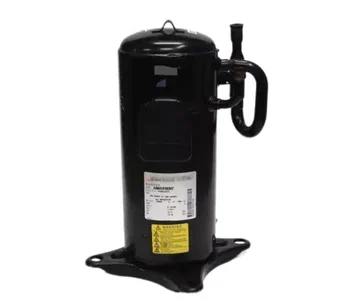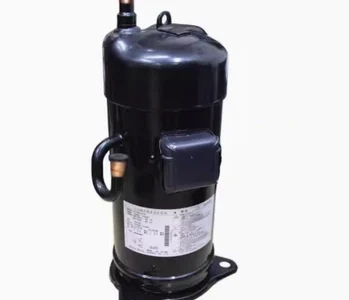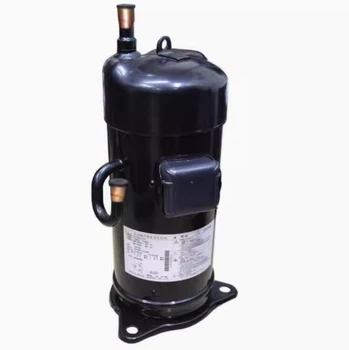
The JT1GCVDKYR@BA is a Daikin hermetically sealed scroll compressor used in inverter-controlled R410A air-conditioning systems. Buyers usually search for this model when repairing a VRV or heat-recovery outdoor unit, so the most important question is not simply whether the compressor looks the same. The compressor code, outdoor-unit model, inverter drive and refrigerant circuit all need to match.
RT Compressor supplies the JT1GCVDKYR@BA for professional replacement and project requirements. Single-unit and volume enquiries are welcome. To quote accurately, we normally ask for a clear nameplate photo and the complete outdoor-unit model.
Confirmed product profile
| Item | Details |
|---|---|
| Model | JT1GCVDKYR@BA |
| Manufacturer family | Daikin |
| Compressor type | Hermetically sealed scroll |
| Control method | Inverter / variable-speed system |
| Refrigerant | R410A |
| Typical use | Daikin VRV and heat-recovery outdoor equipment |
| Order mode | B2B quotation; model verification required |
One point deserves special attention. A listing may describe the equipment as 380–440 V three-phase because that is the supply range of the outdoor system. The compressor itself works as part of an inverter-driven assembly. It should not be treated as a conventional fixed-speed compressor that can be connected directly to three-phase mains. Before installation, the technician must verify the inverter module, wiring arrangement and applicable Daikin service documentation.
Where this compressor is normally used
The JT1GCVDKYR@BA appears in large Daikin outdoor units designed for multi-zone air conditioning and heat recovery. These systems commonly serve hotels, offices, retail buildings, hospitals and mixed-use developments where many indoor units operate from a shared refrigerant network.
In this kind of equipment, compressor selection is closely tied to the control system. The outdoor unit varies compressor speed to follow building load, manage refrigerant flow and coordinate multiple compressor stages. That is why a replacement must be electrically and mechanically compatible with the original assembly. A similar-capacity scroll compressor is not automatically an acceptable substitute.
Five checks before requesting a quotation
1. Read the full compressor code
Characters before and after the @ symbol matter. Do not order from a partial code such as “JT1GCVDKYR” alone. Photograph the complete label and check it against the service record.
2. Record the outdoor-unit model
The same compressor family may be used across several unit combinations. The outdoor-unit code helps confirm the correct compressor version, piping layout and electrical controls.
3. Confirm the refrigerant
The JT1GCVDKYR@BA is associated with R410A equipment. If the system uses another refrigerant, stop and verify the model rather than assuming compatibility.
4. Inspect the inverter and power circuit
A compressor failure can be the result of a damaged inverter board, unstable DC bus, poor terminals, phase-current imbalance or insulation failure. Installing a new compressor without checking the drive can damage the replacement immediately.
5. Identify the original failure cause
Look beyond the failed compressor. Oil loss, refrigerant migration, liquid return, contaminated pipework, blocked heat exchangers and incorrect charging can all shorten compressor life. The new unit should only be installed after the original cause has been corrected.
Installation notes for service contractors
Replacement work should be completed by a qualified HVAC technician using the procedure for the specific outdoor unit. Recover the refrigerant correctly, protect the system from contamination and replace any required filter-driers. Flow dry nitrogen while brazing to reduce internal oxide scale.
After pressure testing, evacuate with a calibrated micron gauge and confirm that the vacuum holds. Charge R410A by weight according to the unit documentation and actual piping length. The technician should also confirm compressor insulation resistance, inverter output, sensors and crankcase-heater operation before commissioning.
On first start, record operating current, discharge temperature, suction and discharge pressures, superheat, subcooling and any controller fault history. These readings provide a useful baseline and can reveal a system problem before it becomes another compressor failure.
Is JT1GCVDKYR@BA interchangeable with JT1GCVDK1YR@BA?
These codes are often mentioned together in service and spare-parts records, but interchangeability should not be decided from a search result alone. Revisions can differ in connectors, control requirements or approved outdoor-unit combinations. Send both the old nameplate and outdoor-unit model for a documented cross-check.
Information to include with an enquiry
For a faster quotation, provide:
- compressor model and nameplate photo;
- complete outdoor-unit model;
- refrigerant;
- destination country and required quantity;
- photos of terminals, connectors and pipe positions;
- whether the requirement is an urgent replacement or planned stock.
This information helps us verify the exact item before shipment and reduces the risk of receiving a physically similar but electrically unsuitable compressor.
Request a JT1GCVDKYR@BA quotation
For current availability, export packaging and delivery options, visit the JT1GCVDKYR@BA product page or send the unit details through the RT Compressor enquiry form. Technical confirmation is available for contractors, distributors and maintenance teams.
Frequently asked questions
Is the JT1GCVDKYR@BA a fixed-speed compressor? No. It is used in an inverter-controlled system and should be matched with the correct drive and outdoor-unit controls.
Which refrigerant does it use? It is associated with R410A Daikin equipment. Always confirm the outdoor-unit nameplate before ordering.
Can it be connected directly to a 380–440 V three-phase supply? Do not make that assumption. The outdoor unit may use a three-phase supply, while the compressor is controlled by an inverter module.
What is needed for a replacement check? Send the full compressor label, outdoor-unit model, refrigerant and clear photos of the terminals and pipe layout.
—