Compressor Guides August 25, 2026 info@rtcompressor.com

ATF250D22UMT 4HP / 3TR Compressor: Capacity Guide, Sizing and Factory Price from

The ATF250D22UMT is a 3-ton-refrigeration (4 HP) compressor for air conditioning and commercial refrigeration, priced from $80-110 – one of the most aggressive price-to-power ratios in the mid-range compressor market. This guide explains what 4 HP/3TR actually means for system selection, where this capacity class earns its living, the true cost story behind the headline price, and the practical guidance buyers need before ordering.

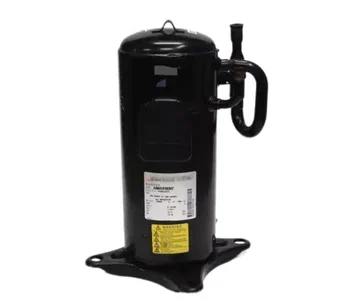
ATF250D22UMT 4HP 3TR compressor for air conditioning and commercial refrigeration
The ATF250D22UMT 4 HP (3 TR) compressor – the small-commercial workhorse class from $80.

Quick Answer: What Is the ATF250D22UMT?

A mid-capacity compressor rated at 4 HP / 3 TR (three tons of refrigeration) covering AC and medium-temperature refrigeration duty. At $80-110 factory-direct with one-piece MOQ, it targets exactly the sweet spot where most small-commercial equipment lives – big enough for real commercial work, small enough that unit cost dominates the project budget.

Specifications

Parameter Specification
Model ATF250D22UMT
Rated power 4 HP
Capacity class 3 TR (36,000 BTU/h)
Application Air conditioning, commercial refrigeration
Minimum order quantity 1 piece
Price range $80 – $110 (contact for quotation)

Understanding the Ratings: HP, TR, and BTU/h

Compressor capacity appears in three units, and confusing them causes real selection errors:

  • BTU/h (British Thermal Units per hour) – the actual cooling capacity: how much heat the system moves. 1 TR = 12,000 BTU/h, so 3 TR = 36,000 BTU/h.
  • TR (tons of refrigeration) – a historical unit from ice-making: the cooling equivalent of melting one ton of ice per day. Still standard in North American-influenced markets.
  • HP (horsepower) – nominally the motor rating, colloquially the capacity class. Rough conversion in AC practice: 1 HP of compressor drive corresponds to roughly 9,000 BTU/h of cooling, hence “4 HP = 3 TR = 36,000 BTU/h”.

The engineering caveat that matters: actual cooling capacity depends on operating conditions (evaporating/condensing temperatures, refrigerant, superheat). Nameplate classes are shorthand, not datasheet guarantees – for precise selection, work from the compressor’s capacity tables at your design conditions.

Application Scenarios: Where the ATF250D22UMT Works

Scenario 1: The 3-ton office and shop AC unit

A 60-90 m2 open-plan office, a street-front shop, a small clinic – these spaces standardize on 3-ton split or packaged units, making this the highest-volume commercial AC capacity class worldwide. It runs long business-hours duty with morning pull-down and afternoon peak. For the service companies maintaining these fleets, a $80-110 factory-direct compressor rewrites repair economics: the compressor swap quote lands well below the new-unit quote, the customer keeps their working system, and the job margins improve on both ends.

Scenario 2: Catering and restaurant cold rooms

A restaurant’s 15-25 m3 walk-in cooler holds service food at +2 to +5 C through a working day of door openings and hot-product loading. The duty is unforgiving – compressor failure mid-service risks the entire kitchen operation. This is classic 3 TR territory: enough capacity for pull-down after deliveries and door traffic, running steady hours between. Owners who lose a compressor on this equipment face a stark quote comparison – and the ATF250D22UMT’s price point keeps repair decisively viable.

Scenario 3: Supermarket and retail display condensing units

Food retailers consolidate display-case cooling into dedicated condensing units, often one per case line, in the 2-4 TR band. Each unit runs long trading hours against door traffic and defrost cycles. Facilities contractors servicing retail chains value this class for its standardization: one compressor family covers the case fleet, simplifying the service van’s stock and the chain’s parts planning – with volume pricing scaling toward $80 at fleet quantities.

Scenario 4: Small agricultural and process cooling

Farm milk-cooling tanks, small brewery glycol circuits, workshop machine-tool cooling – light process applications cluster in the 2-4 TR band with steady, long-hour loads that fixed-speed compressors handle efficiently. For cost-sensitive agricultural and small-industrial buyers, the under-$30-per-horsepower structure at volume makes cooling economics work where branded parts prices would not.

The selection logic for cold rooms: required capacity scales with room volume, insulation quality, infiltration (door openings), and product load (fresh vs frozen, pull-down requirement). A rule-of-thumb starting point for a well-insulated medium-temperature room with moderate door traffic is around 0.5-1 TR per 10 m3, then refined for pull-down and ambients – which puts many practical rooms squarely in the 3 TR class.

The Price Story: What $80-110 Really Means

At the lower end of the band, the ATF250D22UMT prices below $30 per horsepower – a figure that deserves scrutiny rather than blind enthusiasm. The honest breakdown of why factory-direct pricing reaches this level:

  • Channel elimination: no importer, national distributor, regional wholesaler, or dealer margin layers – each of which typically adds 15-30% in Western brand channels.
  • Mature platform economics: the capacity class is among the highest-volume segments globally, with decades of production refinement behind it.
  • Volume-tier structure: the $80 end reflects container-scale ordering; singles and small orders land nearer $110.

What the low price does not change: these are new, factory-tested units with manufacturer warranty. What it also does not excuse: the installation discipline in the section below, because no warranty survives abusive installation.

For distributors and equipment assemblers, this price structure changes business models – condensing unit builders, in particular, find the compressor line-item dropping to a level where assembled-equipment margins widen substantially.

Installation Best Practices

  1. Root-cause discipline: replacing a failed compressor without finding why it failed is buying the same failure twice. Check condenser condition, refrigerant charge history, expansion device operation, and electrical supply quality first.
  2. Filter-drier replacement on every system opening – mandatory, always.
  3. Nitrogen-purged brazing to prevent internal oxide scale.
  4. Deep vacuum below 500 microns with a standing decay test.
  5. Charge by weight to the system design charge; verify with superheat/subcooling.
  6. Three-phase checks where applicable: confirm phase rotation before start-up and measure voltage balance under load.
  7. Commission log – pressures, temperatures, amps, voltage – as the baseline for service and warranty.

ATF250D22UMT vs Alternatives in the Line Card

Need Better fit
4 HP / 3 TR fixed-speed duty, lowest cost ATF250D22UMT (this model)
Heavy commercial duty, large cold storage CSHN315D0BKM class (guide)
Variable-speed comfort cooling, small splits SNB130FGYMC-L1 inverter (guide)
R22 legacy fleet service AAD201A027G (guide)

Ordering and Logistics

Request a quotation stating your refrigerant, voltage requirement, capacity application, and destination – the configuration is confirmed before order commitment. Freight options: air express for urgent replacements (worldwide 5-10 days typical), sea freight for stock and volume orders. Consolidated shipments mixing models across the catalog are supported for distributors. Pricing tiers: singles near the $110 mark, stepping toward $80 at container volumes.

View the ATF250D22UMT product page for the factory quote or use the inquiry form for volume pricing.

Pros and Cons

Pros Cons
Exceptional price-to-power: under $30/HP at volume Fixed-speed only – no inverter modulation
Covers the highest-volume small-commercial capacity class Dual AC/refrigeration fit still needs per-application config confirmation
1-piece MOQ with worldwide shipping Sealed design – replacement not repair
Volume tiers that transform assembler economics Headline price requires quantity for the $80 end

Frequently Asked Questions

Are these new units at this price?

Yes – brand new, factory-run-tested compressors. The price reflects factory-direct channels and volume tiers, not refurbishment.

What does 4 HP mean in cooling capacity?

Approximately 36,000 BTU/h (3 TR) in standard AC practice – the 3-ton commercial class.

What size cold room does 3 TR serve?

Typically 15-40 m3 for medium-temperature duty, depending on insulation, ambient, door traffic, and product load; always verify against a proper load calculation.

Can I use it for both AC and refrigeration?

The model family serves both duty types; confirm the specific refrigerant and application envelope at quotation.

What is the delivery time?

Stocked singles ship in 3-7 working days; air express worldwide typically 5-10 days; sea freight for volume.

Do you support mixed-model container orders?

Yes – consolidation across the catalog with tiered pricing is standard for distributors.

Conclusion

The ATF250D22UMT delivers the capacity class the small-commercial world runs on – 4 HP / 3 TR – at a price point that resets expectations: $80-110 factory-direct, under $30 per horsepower at volume. For condensing-unit builders, service companies, and distributors, it widens margins and wins quotes without leaving the trusted capacity band. Order the confirmed configuration, install to discipline, and the economics follow. Browse the full catalog or compare options in the comparison tool.

info@rtcompressor.com

Related Articles