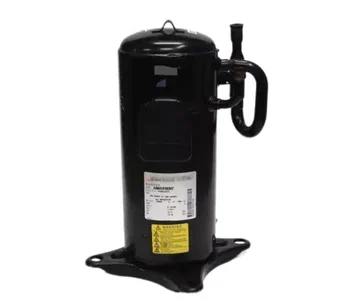
Cooling capacity is one of the most quoted numbers on a refrigeration compressor datasheet, but it is easy to compare the wrong figures. A capacity value only makes sense together with the conditions at which it was rated.
What compressor cooling capacity measures
Cooling capacity is the rate at which a compressor enables the refrigeration system to remove heat from the cooled space or process. It is commonly shown in watts (W), kilowatts (kW), Btu/h or kcal/h. It is not the same as the electrical power the motor consumes.
Electrical input power is the energy drawn by the compressor motor and drive. When both values are given at the same rating point, their ratio is one part of assessing system efficiency. Do not read a compressor’s horsepower (HP) label as its cooling capacity: HP describes a motor/compressor size class, while the actual refrigeration capacity must be checked in the manufacturer’s performance data. Embraco also cautions that HP is not a cooling-capacity unit (Embraco: Selecting the Right Compressor).
Why the rating conditions matter
A catalogue capacity is measured or calculated for a defined set of operating conditions. Typical parameters include evaporating temperature, condensing temperature, refrigerant, suction-gas temperature or superheat, liquid subcooling, and supply frequency. Manufacturers publish these rating points because a model does not have one fixed capacity under every installation condition.
For example, two catalogue figures are not directly comparable if one is specified at a different evaporating or condensing temperature. Changes in those conditions alter the compressor’s pressure ratio and operating point; the capacity and input power must be read from the performance data for the conditions you actually need. Embraco’s installation data lists different standard test conditions for LBP, MBP and HBP ratings (Embraco compressor installation instructions).
Capacity, input power and COP
- Cooling capacity: heat removed by the refrigeration cycle at the stated rating point.
- Input power: electrical power consumed by the compressor at that operating point.
- COP: cooling capacity divided by input power, when both are expressed on a consistent basis and at the same conditions.
A larger motor or higher HP label does not automatically mean the compressor will deliver the required cooling capacity in your application. Refrigerant, application range, electrical supply and the complete system design all matter.
How to compare compressor capacity correctly
- Write down the required evaporating and condensing temperatures.
- Confirm the refrigerant and any specified superheat or subcooling conditions.
- Compare rated capacity at the same test conditions, not just the headline number.
- Check input power, current and allowable operating range alongside capacity.
- For a replacement, compare the original model data and the equipment load; do not select by HP alone.
When requesting a selection, share the refrigerant, required capacity, evaporating and condensing temperatures, voltage, phase and frequency. This gives a supplier the information needed to check the appropriate performance table or selection tool.
Need help comparing compressor data?
Send us the compressor nameplate and operating conditions. Our team can help organize the information needed for a model-by-model technical review. Final selection should always be confirmed against the manufacturer’s current data for the exact model.