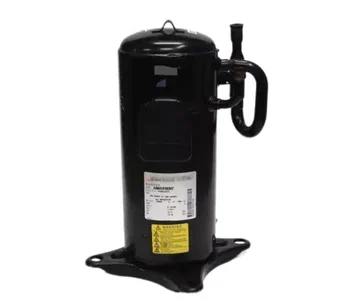
Replacing a refrigeration compressor is not simply a matter of matching the horsepower printed on the label. A suitable replacement must match the system’s refrigerant, duty, electrical supply and physical arrangement—and it must provide the required capacity at the system’s actual operating conditions.
1. Record the complete original model number
Photograph the nameplate and capture every character, including suffixes. A suffix can distinguish voltage, frequency, refrigerant, motor or application variants. Also record the equipment model and serial number where available.
2. Confirm the refrigerant and lubricant
Check the refrigerant specified for the system and confirm that the candidate compressor is approved for it. Verify the required lubricant and any manufacturer instructions for the refrigerant/model combination. Do not assume that compressors with similar dimensions or capacity can share the same refrigerant or oil.
3. Compare capacity at the real operating point
Write down the evaporating and condensing temperatures, plus any specified suction-gas superheat, liquid subcooling and frequency. Compare the candidate’s performance at those conditions. A catalogue headline rating measured at a different point may not represent the capacity your system needs. HP is not a substitute for a capacity check; Embraco recommends verifying capacity and application conditions when selecting a compressor (Embraco selection guidance).
4. Check the application range
Confirm whether the system duty is low-, medium- or high-temperature and compare it with the exact model’s approved operating envelope. LBP, MBP and HBP labels can help orient the search, but manufacturers’ definitions and model limits can differ (Embraco application overview).
5. Match the electrical supply and controls
Verify voltage, phase and frequency, then check current, starting method and required protection. For an inverter-driven compressor, confirm controller/drive compatibility and the specified operating range. A voltage or frequency mismatch can prevent correct operation even when the compressor appears mechanically suitable.
6. Compare mechanical fit and connections
Check suction and discharge connection sizes and orientation, mounting dimensions, overall envelope and required service clearances. Confirm whether adapters or changes to the piping would be needed; do not assume a compressor will fit because its model family looks similar.
7. Review the full system requirements before installation
Check the expansion device, condenser and evaporator capacity, charge procedure, electrical protection and manufacturer installation instructions. A compressor change may require the system to be cleaned, inspected or otherwise prepared according to the equipment and compressor manufacturers’ guidance. Work should be performed by a qualified refrigeration technician.
Information to include in a replacement request
Send the complete nameplate photo, equipment model, refrigerant, required cooling capacity, evaporating and condensing temperatures, voltage, phase, frequency, and destination country. This helps the supplier verify the model before quoting. Ask for the manufacturer’s performance data for the proposed replacement rather than relying on a horsepower comparison alone.
Final check
Do not order until the exact model, refrigerant, capacity at the required conditions, electrical data and physical fit have been reviewed. When any detail is uncertain, request a written technical confirmation from the compressor manufacturer or its authorized supplier.